AI SEO vs Traditional SEO: A Detailed Feature Comparison
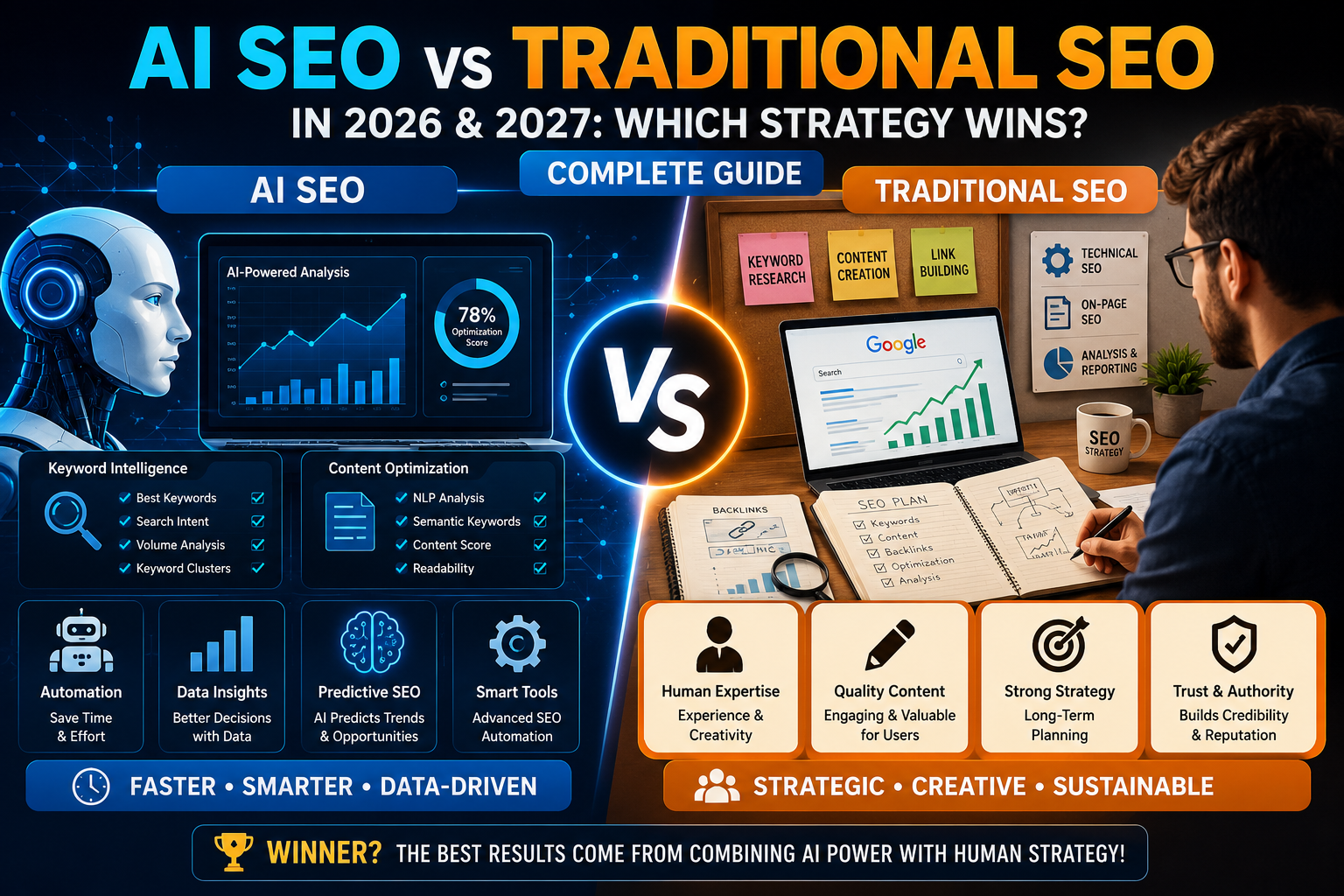
To understand AI SEO vs Traditional SEO, it is important to compare how both approaches perform across different areas of search engine optimization. While AI dramatically improves efficiency, traditional SEO continues to provide the strategic foundation required for sustainable rankings.
Keyword Research AI SEO vs Traditional SEO in 2026 & 2027
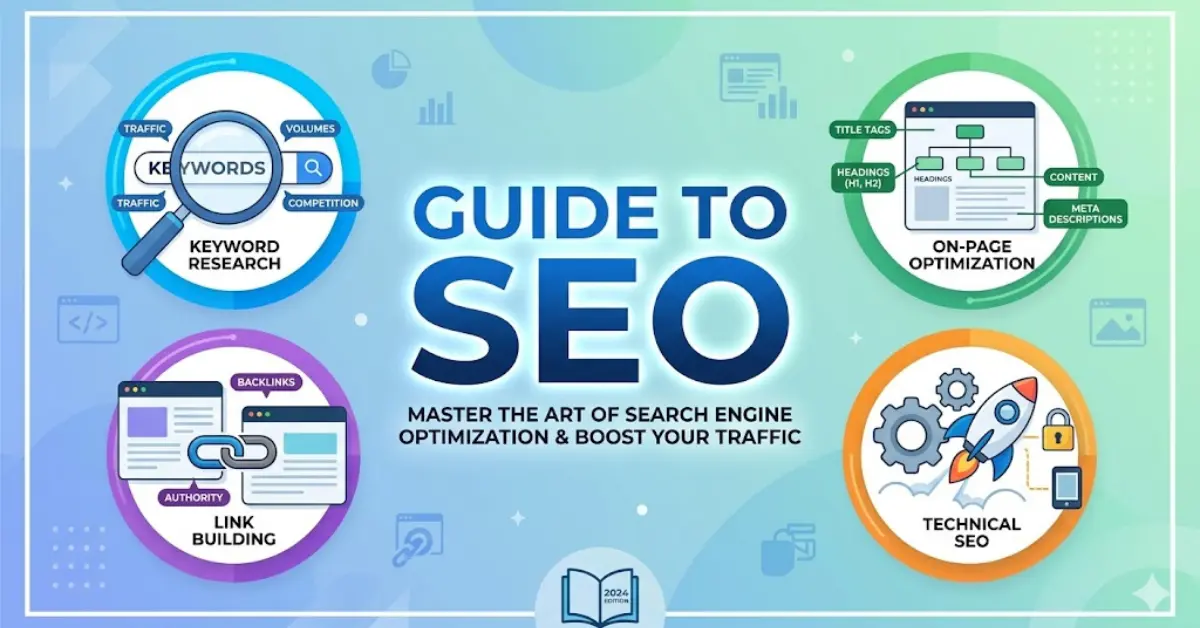
Keyword research remains one of the most important aspects of SEO. AI-powered tools can process millions of search queries, identify keyword clusters, analyze search intent, and recommend high-potential opportunities within minutes.
Traditional SEO professionals, on the other hand, manually evaluate keyword competition, user behavior, business relevance, and conversion potential. Although this process requires more time, AI SEO vs Traditional SEO in 2026 & 2027 it often results in a more refined keyword strategy aligned with business goals.
The most effective approach is to use AI for data collection and human expertise for selecting the right keywords.
Content Planning
Creating high-quality content starts with a strong content strategy.
AI tools can help by generating:
- Topic ideas
- Blog outlines
- Related questions
- Semantic keywords
- Content briefs
- Search intent analysis
However, successful content requires originality, industry expertise, storytelling, and practical experience. Human writers can provide unique insights, case studies, examples, and opinions that make content valuable and trustworthy.
Search engines increasingly reward helpful content that demonstrates real expertise rather than content created solely to rank AI SEO vs Traditional SEO in 2026 & 2027.
Search Intent Optimization
Understanding user intent is essential for ranking on Google.
Every search falls into one of four categories:
- Informational
- Navigational
- Commercial
- Transactional
AI can analyze search results and identify intent patterns, but human marketers understand customer psychology and business objectives more effectively.
For example, someone searching for “best AI SEO tools” may be looking for product comparisons, reviews, or buying recommendations. A skilled SEO professional knows how to structure content that satisfies these expectations while maintaining a natural flow.
On-Page SEO
On-page SEO involves optimizing every element of a webpage to improve visibility in search results.
This includes:
- SEO-friendly titles
- Meta descriptions
- Heading hierarchy
- Internal links
- Image optimization
- Keyword placement
- URL structure
- Schema markup
AI tools can quickly identify missing optimization opportunities and recommend improvements.
Human experts ensure these optimizations enhance readability and user experience rather than simply increasing keyword usage.
Technical SEO
Technical SEO forms the backbone of every successful website.
Important technical factors include:
- Website speed
- Mobile responsiveness
- HTTPS security
- XML sitemap
- Robots.txt configuration
- Canonical tags
- Structured data
- Core Web Vitals
AI-powered auditing tools detect technical problems much faster than manual audits. However, resolving complex server issues, crawl problems, or JavaScript rendering challenges still requires technical expertise.
Combining AI diagnostics with experienced implementation delivers the best results.
Voice Search Is Becoming More Important
The growing popularity of voice assistants has changed how people search online.
Instead of typing short phrases, users ask complete questions.
Examples include:
- Which AI SEO tool is best for beginners?
- How can I improve my website ranking?
- What is the difference between AI SEO and traditional SEO?
To capture voice search traffic:
- Write in natural language.
- Answer questions directly.
- Use FAQ sections.
- Include conversational headings.
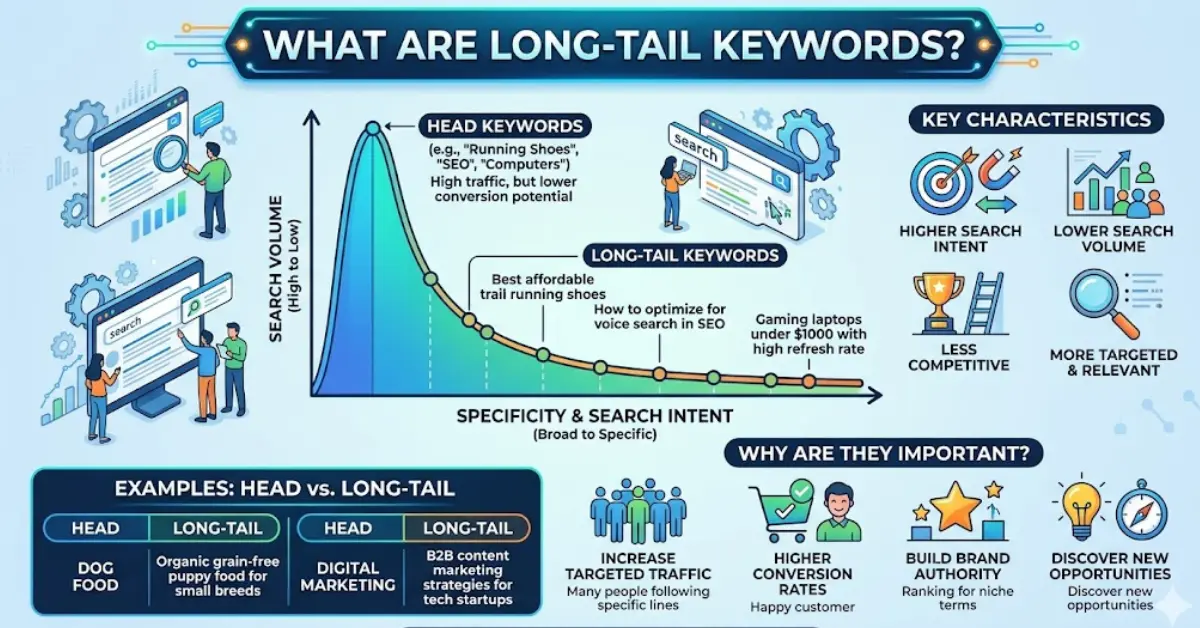
- Target long-tail keywords.
Link Building
Backlinks remain a major ranking factor.
Traditional SEO focuses on earning links through:
- Guest posting
- Digital PR
- Resource pages
- Outreach campaigns
- High-quality content
- Partnerships
AI helps identify backlink opportunities, analyze competitors’ link profiles, and prioritize outreach targets.
Despite these advantages, building genuine relationships with publishers and creating link-worthy content remains a human-driven activity.
Visual Content Supports Better SEO
Text alone is no longer enough to engage visitors.
Adding visual elements such as images, charts, comparison tables, diagrams, infographics, and videos helps explain complex topics more effectively.
Visual content can also increase time on page, encourage social sharing, and improve the overall user experience.
When publishing images, always:
- Compress files for faster loading.
- Use descriptive file names.
- Add meaningful alt text.
- Choose modern formats such as WebP where appropriate.
Optimized visuals contribute to better technical SEO and accessibility.
Content Quality
Google’s algorithms increasingly prioritize quality over quantity.
High-quality content should:
- Solve user problems
- Answer questions clearly
- Include accurate information
- Demonstrate expertise
- Be easy to read
- Stay up to date
AI can improve grammar, structure, and readability, but originality, personal experience, and expert opinions make content truly valuable.
The strongest content combines AI efficiency with human knowledge and editorial review.
The Future of SEO in 2026 & 2027
SEO is evolving rapidly as AI becomes more integrated into search engines and marketing workflows.
Key trends include:
AI-Assisted Content Creation
Businesses will increasingly use AI to generate outlines, perform research, and optimize drafts. Human editors will refine content to ensure originality and trustworthiness.
Search Intent Over Keywords
Modern SEO is moving beyond exact-match keywords. Search engines understand context, meaning, and user intent more effectively than ever before.
E-E-A-T Will Matter More
Experience, Expertise, Authoritativeness, and Trustworthiness will continue to play a crucial role in rankings. Websites that publish reliable, experience-based content are more likely to succeed.
Entity-Based SEO
Search engines are improving their understanding of people, places, organizations, products, and concepts. Optimizing content around entities rather than isolated keywords helps search engines understand topical relevance.
User Experience Signals
Fast loading times, mobile-friendly design, intuitive navigation, and engaging content will remain essential for retaining visitors and improving search performance.
AI Is Changing Content Research
Research is one of the most time-consuming aspects of SEO. AI-powered tools now allow marketers to gather information from multiple sources, identify trending topics, and analyze competitor content in a fraction of the time.
Instead of spending hours collecting data manually, AI can highlight:
- Frequently asked questions
- Emerging search trends
- Competitor content gaps
- Related search terms
- User intent patterns
- Semantic keyword opportunities
This enables writers to spend more time improving content quality instead of searching for information.However, AI-generated research should always be reviewed for accuracy and supplemented with credible sources, industry insights, and firsthand knowledge.
Best Practices for Combining AI SEO and Traditional SEO
To maximize results, follow these best practices:
- Use AI for keyword research and topic discovery.
- Review AI-generated suggestions before publishing.
- Create original content that reflects your expertise.
- Focus on solving real user problems.
- Build a logical internal linking structure.
- Update older articles regularly.
- Optimize images with descriptive file names and alt text.
- Monitor performance using analytics and search console data.
- Improve page speed and Core Web Vitals.
- Earn authoritative backlinks through valuable content and outreach.
Why Original Experience Matters More Than Ever
Search engines increasingly prioritize content created by people with genuine experience.
Readers want practical advice based on real-world use rather than generic summaries. Including personal observations, case studies, screenshots, test results, or examples makes content more trustworthy and engaging.
For example, instead of stating that page speed is important, explain how reducing image sizes, enabling browser caching, and optimizing scripts improved your own website’s loading time and user engagement.
Experience-based content builds credibility and encourages users to spend more time on your site.
Common Mistakes to Avoid
Many websites struggle to rank because they repeat outdated SEO practices.
Avoid these common mistakes:
- Publishing thin or low-value content.
- Ignoring user intent.
- Overusing keywords unnaturally.
- Neglecting mobile optimization.
- Failing to update older content.
- Using duplicate titles and descriptions.
- Building low-quality backlinks.
- Ignoring page speed improvements.
- Publishing AI-generated content without human editing.
Final Recommendation
The comparison between AI SEO vs Traditional SEO should not be viewed as a competition with a single winner. AI brings speed, automation, and data analysis, while traditional SEO contributes strategic thinking, creativity, and genuine expertise.
Organizations that integrate AI into their SEO workflow without sacrificing quality are better positioned to adapt to search engine changes in 2026 and 2027. By combining intelligent automation with human insight, businesses can create content that satisfies users, aligns with search intent, and earns sustainable organic visibility over the long term.