
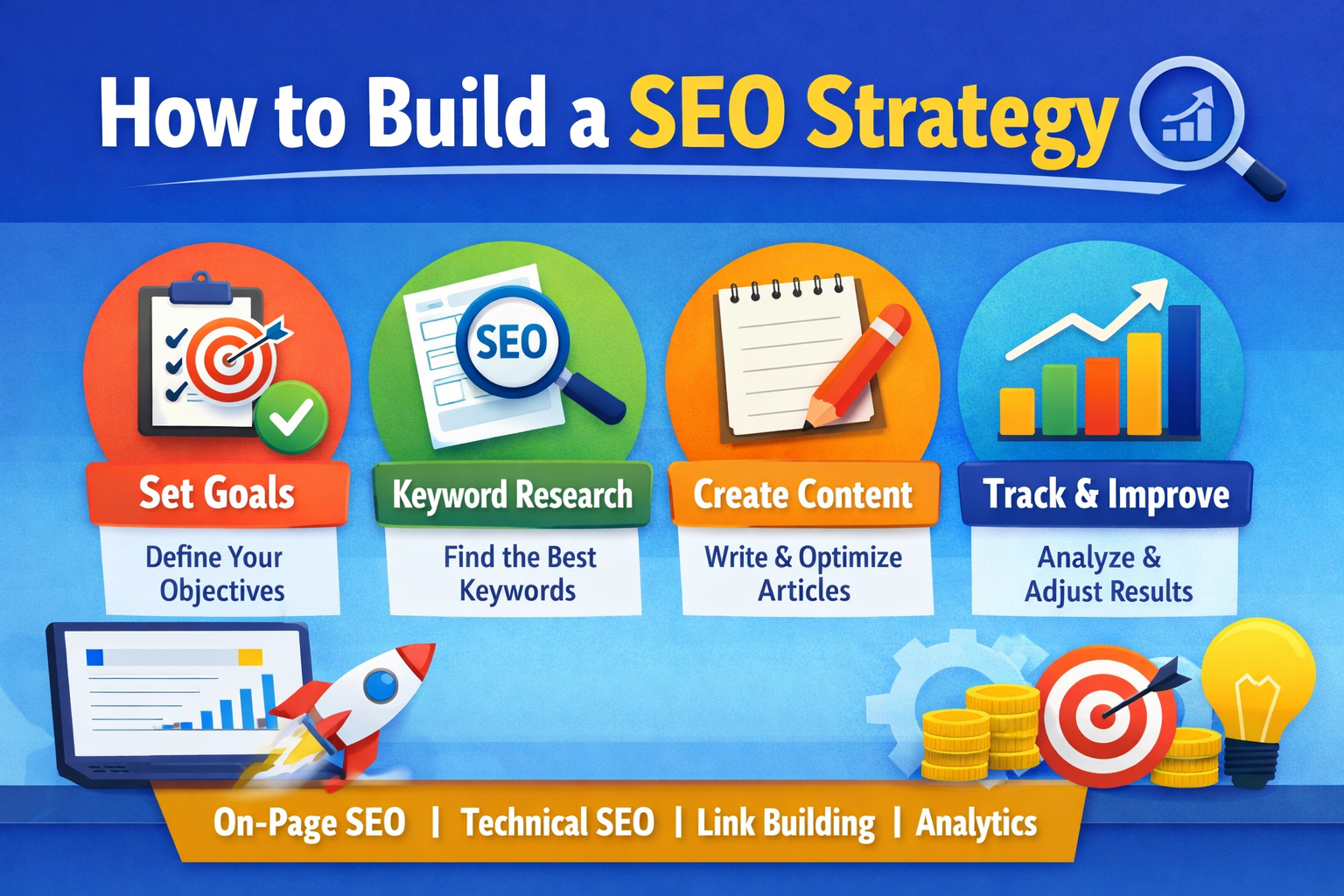
How to Build a SEO Strategy That Actually Drives Organic Traffic Growth
Search engine optimization is no longer about guessing keywords and hoping for the best. Today, Google rewards clarity, expertise, and usefulness. If your SEO strategy lacks structure, your rankings will reflect that.
This guide explains what is SEO strategy, how to build one step by step, and how to create a system that delivers consistent organic traffic growth. You will also learn the SEO strategy process, practical frameworks, and a complete SEO strategy checklist you can use immediately. Let’s get into it.
What is SEO Strategy and Why It Matters
An SEO strategy is a structured long term plan designed to improve a website’s visibility in search engines and attract relevant organic traffic.
It answers three key questions:
- What topics should you target
- How will you create and optimize content
- How will you measure and improve results
Many people confuse strategy with tactics. Writing a blog post is a tactic. Building a keyword driven content system is strategy.
Example
A SaaS company targeting “project management software” does not just write one page. Instead, it builds a strategy:
- Pillar page: Project management guide
- Supporting pages: task management tips, agile vs waterfall, productivity tools
This structured approach helps the site rank for hundreds of related keywords instead of just one.
SEO Strategy vs Tactics
- Strategy defines direction and priorities
- Tactics are the actions you take
Without a strategy, tactics become random efforts. With a strategy, every action supports growth.
| Aspect | SEO Strategy | SEO Tactics |
|---|---|---|
| Purpose | Long term direction | Short term actions |
| Example | Content cluster plan | Writing a blog post |
| Impact | Sustainable growth | Temporary results |
Example:
- Publishing a blog titled “Top SEO Tips” is a tactic.
- Creating a 3 month plan that targets “SEO strategy”, “SEO roadmap for beginners”, and “SEO audit process” through interconnected content is strategy.
Why SEO Strategy Matters
A solid SEO strategy helps you:
- Attract high intent users instead of random traffic
- Build topical authority in your niche
- Improve conversion rates, not just rankings
- Reduce dependency on paid ads
According to Google Search Central guidelines, high quality content that demonstrates expertise and usefulness ranks better over time. That is why strategy matters more than shortcuts.
The SEO Strategy Process Step by Step
Let’s break down the complete SEO strategy process into clear stages.
1. Set Clear Goals
Start with measurable goals:
- Increase organic traffic by 30 percent
- Rank in top 5 for core keywords
- Generate leads through content
Avoid vague goals like “get more traffic.” Define outcomes that you can track.
Example:
Instead of saying “increase traffic”, an ecommerce website sets a goal:
- Rank in top 3 for “best running shoes”
- Increase organic sales by 20 percent in 6 months
This clarity allows better tracking and smarter execution.
2. Understand Your Audience
You cannot build a strong website optimization strategy without understanding users.
Ask:
- What problems do they want to solve
- What keywords do they search
- What type of content do they prefer
Use tools like Google Analytics and Google Search Console for real user data.
Example:
- A digital marketing agency discovered through analytics that users searching “how to develop SEO strategy” prefer step by step guides instead of theory.
- So they shifted content from generic blogs to actionable guides, which increased engagement and time on page.
3. Conduct Keyword Research Strategy
Your keyword research strategy forms the backbone of SEO.
Focus on:
- Primary keywords with search demand
- Long tail keywords with lower competition
- Intent driven keywords
Group keywords based on intent:
- Informational
- Navigational
- Transactional
Do not chase volume alone. Relevance always wins.
4. Analyze Competitors
Look at top ranking pages:
- What topics do they cover
- How detailed is their content
- What structure do they use
This gives you a realistic benchmark.
Example:
A blog noticed that top ranking competitors for “keyword research strategy” had:
- 2000 plus words
- Clear structure
- Examples
They improved their content depth and structure, which helped them move from page 3 to page 1.
5. Build Content Framework
Create a structured content planning SEO system using topic clusters.
More on that later.
Keyword Research Strategy That Works
Keyword research is not about collecting random phrases. It is about understanding demand.
Focus on Search Intent Optimization
Every keyword reflects intent. If you ignore intent, rankings will not convert.
Types of intent:
- Informational: “what is SEO strategy”
- Commercial: “best SEO tools”
- Transactional: “buy SEO services”
Align your content with intent. This improves rankings and engagement.
|
Search Query |
Intent Type | Expected Content |
|
what is SEO strategy |
Informational | Explanation |
| SEO strategy checklist | Practical |
List or checklist |
| best SEO tools | Commercial |
Comparison |
Example:
- If someone searches “what is SEO strategy”, they expect explanation.
- If someone searches “SEO strategy checklist”, they expect a list.
- Websites that mismatch intent, like giving theory instead of checklist, often fail to rank.
Use Reliable Data Sources
Use trusted tools and platforms:
- Google Keyword Planner
- Google Trends
- Search Console
These provide real search behavior data.
Build Keyword Clusters
Instead of targeting one keyword per page:
- Group related keywords
- Create comprehensive content
This improves topical authority and reduces keyword cannibalization.
Example:
Instead of targeting only “SEO strategy”, a website targets:
- SEO strategy process
- SEO roadmap for beginners
- website optimization strategy
This expands visibility and captures different stages of user intent.
Topic Clusters SEO and Content Planning
What are Topic Clusters
Topic clusters organize content around a central theme.
Example:
- Pillar page: SEO strategy
- Supporting pages: keyword research strategy, technical SEO basics, SEO audit process
All pages link back to the pillar.
|
Primary Keyword |
Supporting Keywords |
|
SEO strategy |
SEO strategy process |
| SEO strategy |
SEO roadmap for beginners |
| SEO strategy |
website optimization strategy |
Why Topic Clusters Work
They help:
- Search engines understand your expertise
- Improve internal linking
- Increase ranking potential
Google prefers websites that show depth in a topic, not scattered content.
Content Planning SEO Framework
Follow this approach:
- Identify core topics
- Create pillar pages
- Build supporting content
- Interlink everything logically
Consistency beats volume. Publishing 10 random articles will not help. Publishing 5 well structured cluster articles will.
Example:
Instead of publishing random blogs, a company planned:
- Week 1: SEO strategy basics
- Week 2: keyword research strategy
- Week 3: search intent optimization
This structured publishing improved consistency and rankings.
On Page SEO Optimization Essentials
On page SEO ensures your content communicates clearly with search engines.
Key Elements of On Page SEO Optimization
- Title tags with primary keywords
- Meta descriptions that improve click through rate
- Proper header structure using H1, H2, H3
- Internal linking to relevant pages
- Optimized images with alt text
Content Quality Signals
Google evaluates:
- Relevance
- Depth
- Readability
Keep paragraphs short. Use simple language. Avoid fluff.
Writing for Humans First
If your content sounds robotic, users will leave. That increases bounce rate.
Write like you explain to a colleague. Clear, direct, and helpful.
Example:
A blog updated its title from:
- “SEO Tips” to “How to Build a SEO Strategy for Beginners”
This small change improved click through rate and rankings
Technical SEO Basics You Cannot Ignore
Technical SEO ensures your website is accessible and efficient.
Core Technical SEO Basics
- Fast page loading speed
- Mobile friendly design
- Secure HTTPS connection
- Clean URL structure
- Proper indexing and crawling
Why Technical SEO Matters
Even great content will not rank if:
- Pages load slowly
- Search engines cannot crawl them
Google uses Core Web Vitals as ranking signals. Performance matters.
Tools to Use
- Google PageSpeed Insights
- Google Search Console
- Screaming Frog
These tools help identify issues quickly.
Example:
A website reduced its page load time from 5 seconds to 2 seconds using image compression and caching.
After that:
- Bounce rate decreased
- Rankings improved
This shows how technical SEO directly impacts performance.
SEO Audit Process for Continuous Improvement
SEO is not a one time task. You need regular audits.
What is SEO Audit Process
An SEO audit evaluates your website’s performance and identifies issues.
Key Areas to Audit
- Technical issues
- Content gaps
- Keyword performance
- Backlink profile
How to Conduct an Audit
- Check indexing status
- Analyze traffic trends
- Identify underperforming pages
- Update outdated content
Regular audits keep your strategy aligned with current trends.
Example:
During an audit, a website found that 30 percent of its pages had outdated content.
After updating those pages:
- Traffic increased
- Rankings recovered
SEO audits often unlock hidden growth.
How to Develop SEO Strategy for Long Term Growth
Build Authority Over Time
Authority does not happen overnight.
Focus on:
- High quality content
- Consistent publishing
- Relevant backlinks
Example:
A niche blog published one high quality article every week for 6 months.
Instead of quick results, they saw steady growth:
- More keywords ranking
- Increased domain authority
Consistency proved more effective than shortcuts.
Optimize for User Experience
Google prioritizes user satisfaction.
Improve:
- Navigation
- Readability
- Page speed
Measure and Adjust
Track:
- Organic traffic
- Keyword rankings
- Conversion rates
Use data to refine your approach.
SEO Roadmap for Beginners
If you feel overwhelmed, follow this simple roadmap.
Month 1
- Perform keyword research
- Audit your website
- Fix technical issues
Month 2
- Create pillar content
- Publish supporting articles
Month 3
- Improve internal linking
- Start link building
Month 4 and Beyond
- Update content regularly
- Expand topic clusters
- Track performance
SEO rewards patience. Quick wins exist, but long term growth needs consistency.
|
Month |
Action |
|
Month 1 |
Keyword research and audit |
|
Month 2 |
Content creation |
| Month 3 |
Internal linking and backlinks |
| Month 4+ |
Optimization and scaling |
Example:
A beginner followed this roadmap:
- Month 1: keyword research
- Month 2: publish 5 articles
- Month 3: improve internal linking
By month 4, they started ranking for long tail keywords and gaining traffic.
Website Optimization Strategy That Converts
Traffic alone is not enough. You need conversions.
Align Content with Business Goals
Every page should have a purpose:
- Inform
- Capture leads
- Drive sales
Improve Engagement
Use:
- Clear headings
- Visual hierarchy
- Actionable insights
Reduce Friction
Make it easy for users to:
- Navigate
- Read
- Take action
A good SEO strategy brings traffic. A great one converts it.
Example:
A service website added a clear call to action:
- “Get Free SEO Audit”
This increased conversions even without increasing traffic.
SEO Strategy Checklist
Here is your practical SEO strategy checklist:
Planning
- Define clear goals
- Identify target audience
- Conduct keyword research
Content
- Build topic clusters
- Optimize for search intent
- Maintain content quality
Technical
- Improve site speed
- Ensure mobile friendliness
- Fix crawl errors
Optimization
- Implement on page SEO
- Use internal linking
- Optimize meta tags
Monitoring
- Track rankings
- Analyze traffic
- Perform regular audits
Use this checklist to stay consistent.
|
Category |
Tasks |
|
Planning |
Goals, audience, keywords |
|
Content |
Clusters, intent, quality |
| Technical |
Speed, mobile, crawl |
| Optimization |
On page SEO, linking |
| Monitoring |
Tracking and audits |
Common Mistakes to Avoid
Even experienced marketers make these mistakes. The problem is not lack of effort. The problem is focusing on the wrong things.
Avoid these if you want consistent organic traffic growth.
Ignoring Search Intent
Ranking alone does not guarantee success. If your content does not match what users expect, they will leave quickly.
Search intent defines what users want:
- Information
- A solution
- A product
- A comparison
If someone searches “SEO strategy checklist” and lands on a long theoretical article, they will bounce. Google tracks this behavior.
Example:
A blog ranked on page 1 for “what is SEO strategy” but had no clear explanation at the top. Users left within seconds. After restructuring the content with a clear definition and summary, engagement improved and rankings stabilized.
- Focus on giving users exactly what they are looking for. Not what you want to explain.
Over Optimizing Keywords
Many believe repeating keywords improves rankings. That approach no longer works.
Keyword stuffing:
- Reduces readability
- Looks unnatural
- Triggers negative SEO signals
Google understands context, not just repetition.
Example:
A page repeatedly used “SEO strategy” in every sentence. It ranked poorly. After rewriting with natural language and related terms like “SEO planning” and “search strategy,” rankings improved.
- Write naturally. Use keywords where they fit, not everywhere.
Neglecting Technical SEO
You can write great content, but technical issues can block rankings.
Common issues include:
- Slow loading pages
- Broken links
- Poor mobile experience
- Indexing errors
Google prioritizes performance and usability.
Example:
A website reduced its page load time from 5 seconds to under 2 seconds. After that:
- Bounce rate dropped
- Page rankings improved
Technical SEO is not optional. It is the foundation.
Publishing Without Strategy
Publishing more content does not mean better results.
Random articles:
- Do not build authority
- Do not rank consistently
- Do not support each other
Google prefers structured content ecosystems.
Example:
One website published 50 unrelated blog posts and saw no growth. Another published 15 articles around a single topic cluster. The second website ranked higher because it showed depth and expertise.
- Focus on quality + structure, not quantity.
Real World Insight Based on Trusted Sources
Google emphasizes helpful content and user first experiences. According to Google Search Central documentation:
- Content should demonstrate expertise and trust
- Pages should satisfy user intent fully
- Technical performance affects rankings
These guidelines confirm that SEO success depends on quality and structure, not tricks.
Example:
- A blog ranked for “SEO strategy” but failed to convert users because it did not include actionable steps.
- After adding checklists and examples, engagement improved significantly.
Conclusion
Building a strong SEO strategy requires planning, execution, and continuous improvement.
Now you know:
- What is SEO strategy and why it matters
- How to follow a structured SEO strategy process
- How to use keyword research, content planning, and technical SEO together
- How to create a scalable system for organic traffic growth
Start simple. Stay consistent. Improve based on data.
SEO is not magic. It is a system. And once you build that system properly, results follow.
Frequently Asked Questions
1. What is SEO strategy in simple terms?
An SEO strategy is a structured plan to improve a website’s visibility on search engines. It focuses on keyword research, content creation, and optimization to drive organic traffic.
2. Why is SEO strategy important for websites?
SEO strategy helps attract relevant users, improve search rankings, and increase conversions. Without a strategy, SEO efforts become inconsistent and less effective.
3. How do you build an effective SEO strategy?
To build an effective SEO strategy, define goals, research keywords, understand user intent, create quality content, optimize your website, and track performance regularly.
4. What are the key elements of an SEO strategy?
The key elements include keyword research, content planning, on page SEO, technical SEO, link building, and performance analysis.
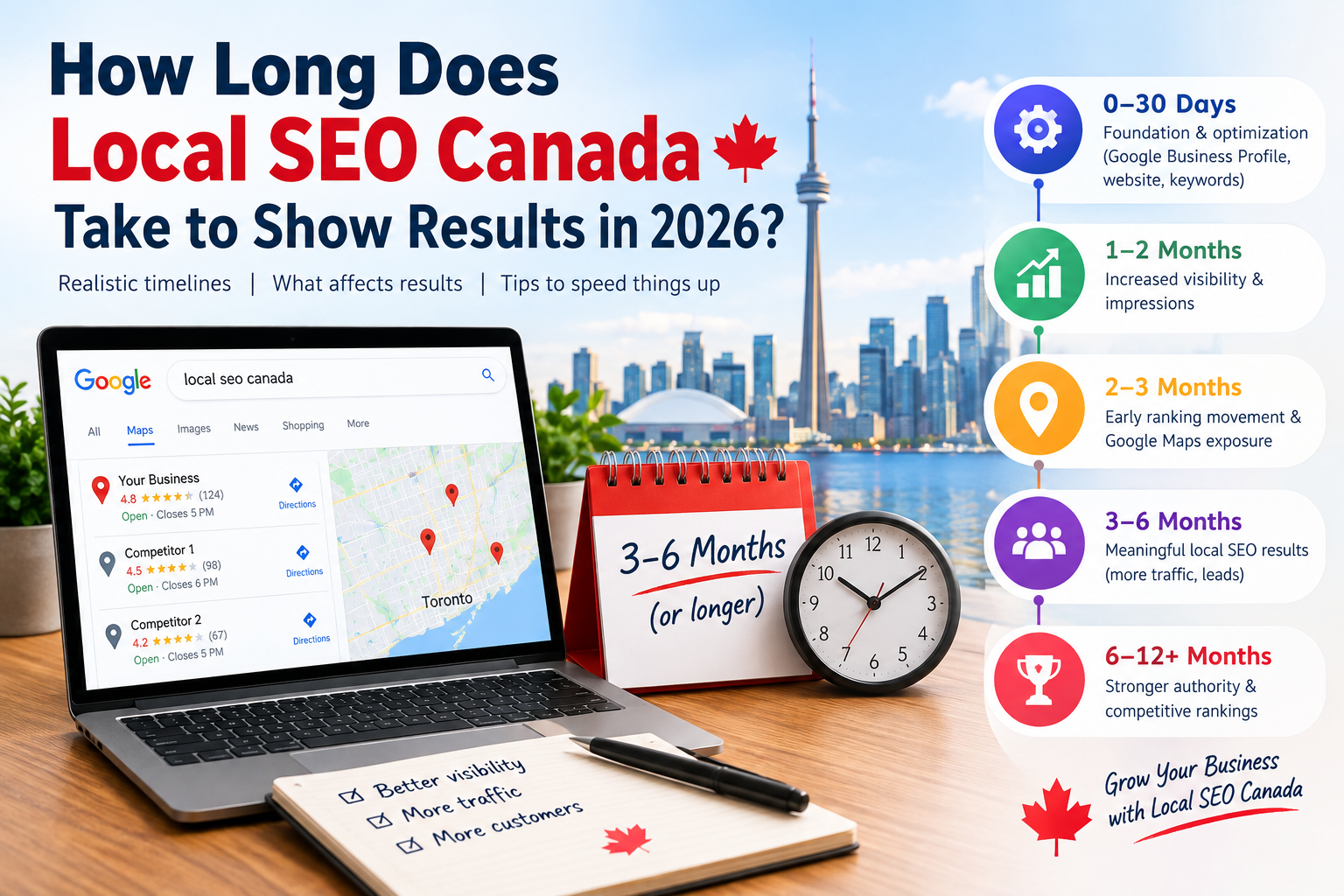
5. How long does it take for an SEO strategy to show results?
SEO typically takes 3 to 6 months to show noticeable results. However, timelines depend on competition, content quality, and consistency.
6. What is the difference between SEO strategy and SEO tactics?
SEO strategy defines long term goals and direction, while SEO tactics are specific actions like writing blog posts or optimizing meta tags.
7. What is keyword research strategy in SEO?
Keyword research strategy involves identifying relevant search terms, analyzing competition, and targeting keywords based on search intent to improve rankings.
8. What is search intent in SEO?
Search intent refers to the purpose behind a user’s query. It can be informational, commercial, or transactional, and content must match this intent to rank well.
9. What are topic clusters in SEO?
Topic clusters are a content structure where a main topic connects with related subtopics through internal linking, helping improve authority and rankings.
10. How can beginners start an SEO strategy?
Beginners should start with keyword research, create quality content, fix technical issues, and gradually build internal links and backlinks for growth.





2 thoughts on “How to Build a SEO Strategy That Actually Drives Organic Traffic Growth”