
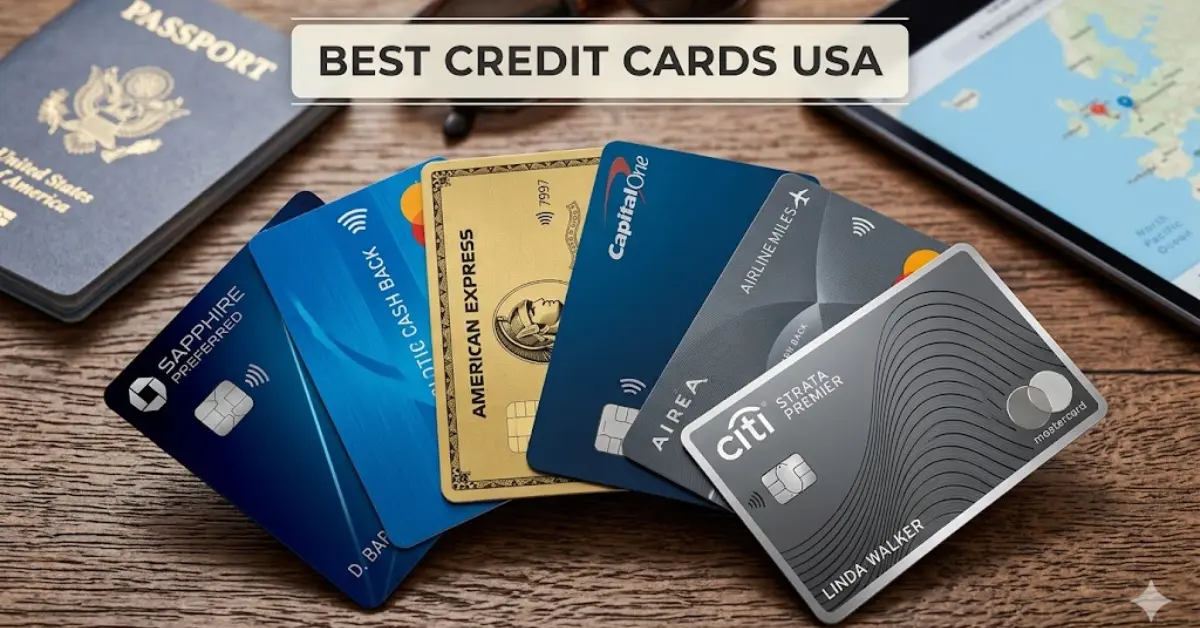
Let’s be honest. Swiping a piece of plastic shouldn’t require a finance degree. Yet, if you search for the best credit cards USA, you’ll quickly drown in sign-up bonuses, point multipliers, and fine print that reads like a legal thriller.
I’ve spent over a decade analyzing consumer credit products, tracking issuer behavior, and helping readers match cards to real spending habits. I don’t guess. I compare fee structures, evaluate redemption math, cross-check regulatory guidelines, and strip away marketing fluff. This guide gives you a clear, data-backed framework to pick a card that actually works for your budget, your goals, and your credit profile.
All data below reflects current industry standards, Federal Reserve reporting, and Consumer Financial Protection Bureau (CFPB) guidelines. Card terms change frequently. Always verify exact rates, fees, and bonus structures on the issuer’s official site before applying.
How to Match a Card to Your Financial Goals
Issuers design top us credit cards around specific spending behaviors. You don’t need the flashiest card. You need the card that aligns with your monthly habits.
Start by tracking your expenses for one billing cycle. Categorize your spending. Identify where your money actually goes. Most Americans spend heavily on groceries, gas, dining, and utilities. If your monthly outflow matches a card’s bonus categories, you earn rewards without changing your lifestyle. If you travel twice a year, a high-fee travel card wastes your money. If you carry a balance, a rewards card hurts you more than it helps.
Pick your primary goal first. Pay down debt? Build credit? Earn everyday rewards? Fund trips? Once you lock your goal, the card category falls into place. The rest comes down to math, discipline, and reading the terms.
Best Cashback Credit Cards USA
Cashback wins for simplicity. You spend. You earn a percentage back. The issuer deposits cash into your account or applies a statement credit. No portals. No blackout dates. No complex point valuations.
Look for two structures:
- Flat-rate cards return 1.5% to 2% on every purchase. You never track categories. You never miss a bonus window.
- Rotating or fixed-category cards return 3% to 5% on specific purchases like groceries, gas, or streaming services. You maximize value when your spending matches the bonus buckets.
Many cashback cards waive annual fees. That keeps your break-even point at zero. You earn from day one. Some issuers offer first-year match programs that double your cashback earnings. These promotions help you build a small safety net while you learn how to use credit responsibly.
Avoid chasing category bonuses that force you to overspend. The CFPB consistently warns consumers that chasing rewards often increases monthly outflow. Stick to your budget. Let the cashback arrive as a bonus, not a spending trigger.
Best Travel Credit Cards USA
Travel cards operate on a different economy. You earn points or miles instead of cash. You redeem them through airline partners, hotel chains, or issuer travel portals. The math shifts from simple percentages to redemption multipliers.
Premium travel cards typically charge annual fees between $95 and $695. That fee covers lounge access, travel credits, priority boarding, and insurance protections. You only benefit when you actually use those perks. A $300 airline credit means nothing if you fly once a year. A $100 TSA PreCheck credit loses value if you already hold Global Entry.
Focus on transfer partners. Cards that let you move points to airline and hotel loyalty programs give you the highest redemption ceiling. A point might buy $0.01 in portal travel. The same point might buy $0.02 or more when transferred to a frequent flyer program during a promotion.
Travel cards also pack robust purchase protections. They cover trip delays, lost luggage, and rental car damage. These protections replace standalone insurance policies. You save money by consolidating coverage into your existing card ecosystem.
Best Balance Transfer Credit Cards USA
Carrying high-interest debt drains your wallet. A best balance transfer credit cards usa strategy stops the bleed. These cards offer introductory 0% APR periods that last 12 to 21 months. You move existing debt to the new card. You pay down the principal without interest compounding in the background.
Balance transfers charge a one-time fee, usually 3% to 5% of the transferred amount. That fee often pays for itself within three months when you compare it to a 22% purchase APR. Run the math before you apply. Calculate your monthly payoff amount. Divide the total balance by the intro period months. Set up automatic payments. Treat the transfer like a strict loan with a hard deadline.
Missing a payment or exceeding your credit limit often voids the introductory rate. Issuers instantly switch you to the standard variable APR. Keep your utilization below 30%. Pay on time. Track the expiration date. The strategy works only when you execute it with discipline.
Best Student Credit Cards USA
College years build financial habits that follow you for decades. The best student credit cards usa prioritize credit building over flashy rewards. Issuers design these products with lower credit limits, modest annual fees, and clear graduation paths.
Student cards typically require minimal income and accept applicants with limited credit history. Many report to all three major credit bureaus immediately. You build a payment record that lenders read when you apply for an apartment loan, a car loan, or a mortgage later.
Look for cards that offer cashback on dining, groceries, and streaming. Students spend heavily in these categories. Some issuers reward good grades with statement credits. Others waive foreign transaction fees for study abroad semesters. These features align with real student expenses.
The CARD Act of 2009 requires applicants under 21 to show independent income or secure a co-signer. Issuers enforce this rule strictly. You cannot bypass it with a high credit score. Build income documentation early. Apply when your financial profile meets the requirement.
Secured vs Unsecured Credit Cards
New credit seekers often ask about secured vs unsecured credit cards. The difference boils down to risk and deposit requirements.
Secured cards require a refundable security deposit. That deposit usually sets your credit limit. You risk $500, you receive a $500 limit. Issuers use secured products to test payment behavior without exposing themselves to default risk. You build credit history exactly like an unsecured user. Many issuers automatically graduate you to an unsecured card after 6 to 12 months of on-time payments. They return your deposit and raise your limit.
Unsecured cards require no deposit. Issuers approve you based on income, credit history, debt-to-income ratio, and payment patterns. You gain immediate access to higher limits and better rewards. You also face stricter approval standards.
Choose secured when you rebuild credit, recover from bankruptcy, or start from zero. Choose unsecured when you already hold a FICO score above 670, maintain steady income, and pay balances in full. Both report to bureaus. Both build history. The path changes based on your starting point.
Credit Score Requirements for Credit Cards
Issuers evaluate credit score requirements for credit cards using FICO and VantageScore models. They group applicants into tiers that map directly to card eligibility.
- 300–579 (Poor): You face limited options. Secured cards and retail store cards dominate this range. You pay higher interest rates and lower credit limits.
- 580–669 (Fair): You qualify for basic unsecured cards, student products, and some secured cards with rewards. Approval depends heavily on income and recent payment history.
- 670–739 (Good): You unlock mainstream rewards cards, travel products, and balance transfer offers. Issuers view you as a reliable borrower.
- 740–799 (Very Good): You receive premium approvals, higher limits, and competitive APRs. You access cards with strong travel and cashback ecosystems.
- 800–850 (Excellent): You qualify for elite-tier cards with the highest sign-up bonuses, lowest fees, and most flexible redemption options.
Scores alone don’t guarantee approval. Issuers review income stability, employment length, recent hard inquiries, and existing debt levels. A high score with maxed-out cards still triggers declines. A moderate score with clean payment history and low utilization often wins approval. Keep utilization under 30%. Pay on time every month. Avoid applying for multiple cards in a short window. Hard inquiries drop your score temporarily and signal financial stress.
Credit Card Interest Rates USA
Credit card interest rates usa fluctuate with Federal Reserve policy and issuer risk models. The average purchase APR hovers around 22% to 24% as of recent Federal Reserve reporting. Premium cards and subprime products push that range higher.
Credit cards charge variable APRs. Issuers tie these rates to the Prime Rate. When the Fed raises rates, your card’s APR climbs. When the Fed cuts rates, your APR drops. You cannot lock in a fixed rate on standard consumer cards.
Interest compounds daily. You owe interest on your average daily balance, not just your statement balance. You avoid all interest when you pay the full statement balance by the due date. This grace period protects you from carrying costs.
Penalty APRs jump to 29.99% or higher when you miss payments or return checks. These rates stick for six months or more. Issuers rarely reverse them unless you demonstrate consistent on-time payments afterward. Treat interest as a warning system. High APRs reward debt. Pay in full. Keep your money.
Cashback vs Travel Credit Cards
The cashback vs travel credit cards debate splits users into two camps. Neither side wins universally. The right choice depends on your redemption preferences and travel frequency.
Cashback delivers predictable value. One dollar equals one dollar. You receive statement credits, direct deposits, or gift cards. You never calculate point multipliers. You never navigate blackout dates. You see the exact return before you swipe.
Travel cards deliver higher ceiling value. Points multiply when you transfer to airline or hotel partners. You book premium cabins, luxury resorts, and international flights at steep discounts. You pay annual fees. You navigate transfer windows. You research redemption sweet spots. You earn outsized value when you travel often and book strategically.
Use cashback when you want simplicity, predictable returns, and minimal account management. Use travel cards when you fly regularly, value airport perks, and enjoy optimizing point transfers. Many consumers run both. They use a flat-rate cashback card for everyday spending. They route large travel purchases to a points card. They keep the ecosystem balanced and stress-free.
No Foreign Transaction Fee Credit Cards
Travelers and remote workers lose money fast when they swipe abroad. Most issuers charge a 3% foreign transaction fee on every international purchase. That fee applies to currency conversions, online purchases from overseas merchants, and even domestic transactions processed through foreign banks.
No foreign transaction fee credit cards remove this penalty. You pay the exact purchase price converted at the network exchange rate. Visa, Mastercard, and American Express process international transactions with competitive wholesale rates. You keep the full value of your spending.
These cards rarely charge annual fees in the mid-tier range. Premium travel products include the fee waiver as a standard perk. Always verify the terms before booking flights or reserving hotels overseas. Some student and secured cards charge the fee by default. Others waive it to compete in the global market.
Carry one foreign-fee-free card in your travel wallet. Use it for all international transactions. Keep a backup card in a separate location. Networks experience occasional outages. Redundancy saves trips from turning into payment emergencies.
How to Use These Cards Without Falling Into Debt Traps
Credit cards amplify your financial habits. They reward discipline. They punish impulse. You control the outcome when you follow a clear system.
- Enable autopay for the full statement balance. Never settle for the minimum. Minimum payments extend debt for years and compound interest aggressively.
- Track utilization weekly. Keep your reported balance below 30% of your limit. Below 10% boosts your score fastest. Issuers report to bureaus once per billing cycle. Timing matters.
- Treat rewards as a discount, not income. Never increase spending to chase points. The math always favors the issuer when you overspend.
- Review statements line by line. Fraud happens quickly. Dispute unauthorized charges immediately. Federal law caps your liability at $50 when you report promptly. Most issuers waive that amount entirely.
- Close cards strategically. Keep old accounts open when possible. Length of credit history drives 15% of your FICO score. Close high-fee cards you don’t use. Keep zero-fee cards active with a small recurring charge.
You don’t need financial perfection. You need consistency. Small habits compound into high credit scores, lower borrowing costs, and stress-free reward accumulation.
Frequently Asked Questions
1. Do credit card applications hurt my credit score?
Each application triggers a hard inquiry. That inquiry drops your score by 2 to 5 points temporarily. Multiple inquiries within a short window signal financial stress and lower your score further. Space applications 6 to 12 months apart when possible.
2. Can I get a credit card with no credit history?
Yes. Secured cards, student cards, and authorized user status let you start building credit immediately. Issuers report your payment history to bureaus once you activate the account.
3. How often do credit card rewards expire?
Most major issuers do not expire rewards while the account remains open and in good standing. Some retail and airline-specific cards expire points after 12 to 24 months of inactivity. Always verify the loyalty program terms.
4. Should I pay my balance before the statement closes or after?
A: Pay before the statement closes to lower your reported utilization. Issuers report the statement balance to credit bureaus. A lower reported balance boosts your score faster. You still avoid interest by paying the full statement balance by the due date.
5. Do secured cards really help rebuild credit?
A: Yes. Secured cards report to all three major credit bureaus identically to unsecured cards. Consistent on-time payments, low utilization, and responsible usage rebuild your score over 6 to 12 months.
Final Thoughts
The best credit cards USA don’t exist in a vacuum. They exist in your budget, your spending patterns, and your financial goals. You win when you match the card to your actual behavior. You lose when you chase marketing promises that don’t align with your reality.
Start with your objective. Pay down debt? Use a balance transfer card. Build credit? Open a secured or student card. Earn everyday value? Choose a flat-rate cashback card. Travel frequently? Optimize a points ecosystem. Keep utilization low. Pay in full. Read the terms.
Credit works best when you treat it as a tool, not a lifeline. You control the tool. Use it with intention, track your progress, and let the rewards arrive naturally. Your future self will thank you when you stand in an airport lounge with a zero-balance statement and a credit score that opens every door.
Verify all current rates, fees, and bonus structures directly on issuer websites before applying. Terms change frequently. This guide reflects industry standards, Federal Reserve data, and CFPB consumer guidelines as of 2026.
References & Data Sources
- Federal Reserve Board. Consumer Credit Statistical Release & G.19 Report. (Average credit card APR trends, 2024–2026)
- Consumer Financial Protection Bureau (CFPB). Credit Card Guide & CARD Act of 2009 Regulations.
- FICO. FICO Score Ranges & Credit Scoring Model Guidelines.
- Visa/Mastercard/American Express Network Terms. Foreign Transaction Fee Policies & Currency Conversion Standards.
- U.S. Bureau of Labor Statistics. Consumer Expenditure Survey (Spending Category Trends).





nice