
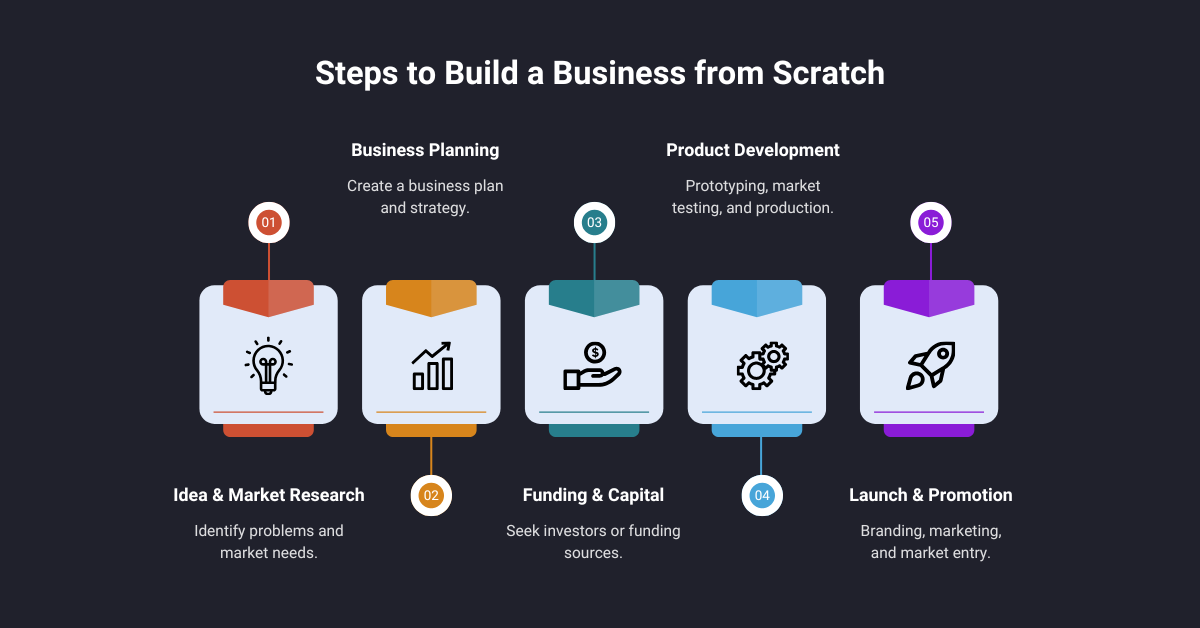
How to Build a Digital Marketing Strategy from Scratch (Step-by-Step Guide)
In today’s fast-moving digital world, knowing how to build a digital marketing strategy from scratch can transform your business from invisible to unstoppable. Whether you’re an entrepreneur, freelancer, or marketer, a clear, actionable marketing strategy helps you attract the right audience, grow your online presence, and increase conversions — all while staying ahead of the competition.
This comprehensive guide will walk you through every step of creating a successful digital marketing strategy — from defining goals to tracking your success. Let’s dive in!
What Is a Digital Marketing Strategy?
A digital marketing strategy is a roadmap that outlines how your business will use online channels — such as SEO, social media, email, and paid ads — to achieve marketingHow to Build a Digital Marketing Strategy from Scratch goals.
It’s not just about posting content or running ads.How to Build a Digital Marketing Strategy from Scratch It’s about understanding your audience, setting measurable goals, and executing tactics that move the needle.
Key components include:
- Audience research
- Content planning
- SEO and keyword targeting
- Social media engagement
- Email campaigns
- Paid advertising
- Analytics and optimization
Step 1: Define Your Marketing Goals
Before anything else, identify what you want to achieve. Every successful strategy starts with clear, measurable goals.
SMART Goals Framework
Use the SMART framework to set strong objectives:
- Specific: What exactly do you want to achieve?
- Measurable: How will you track success?
- Achievable: Is it realistic based on your resources?
- Relevant: Does it align with your overall business goals?
- Time-bound: When do you expect results?
Example:
Instead of saying “I want more traffic,” try:
“I want to increase organic website traffic by 30% in the next 6 months through SEO and content marketing.”
Step 2: Know Your Target Audience
To create a strategy that works, you need to understand who you’re talking to.
Research Your Audience:
- Demographics: Age, gender, location, occupation.
- Psychographics: Interests, motivations, challenges.
- Online behavior: What platforms do they use? What type of content do they engage with?
Create Buyer Personas
A buyer persona is a semi-fictional profile of your ideal customer. For example:
Persona: Digital Donna
- Age: 29
- Interest: Online shopping and learning digital skills
- Goal: Build an online brand
- Pain point: Doesn’t know where to start with marketing
Understanding your audience helps you craft the right message and choose the right channels.
Step 3: Conduct a Competitor Analysis
Analyzing your competitors helps you discover what’s working in your industry and identify gaps to fill.
How to Do It:
- Identify your top 3–5 competitors.
- Use tools like Ahrefs, SEMrush, or SimilarWeb to analyze their:
- Keywords
- Content strategy
- Backlinks
- Social media presence
- Ask yourself:
- What type of content do they publish?
- How often do they engage on social media?
- Which topics bring them the most traffic?
Once you know what’s working for them, create something better and more valuable.
Step 4: Choose Your Digital Marketing Channels
When building a digital marketing strategy from scratch, you must focus on the platforms that give the best ROI for your business type.
Major Digital Channels:
- Search Engine Optimization (SEO) – Drive organic traffic through keyword optimization, backlinks, and high-quality content.
- Content Marketing – Use blogs, videos, and infographics to educate and engage.
- Social Media Marketing – Build relationships and brand awareness on platforms like Instagram, LinkedIn, and Facebook.
- Email Marketing – Nurture leads with newsletters, offers, and updates.
- Pay-Per-Click (PPC) Advertising – Reach your target audience instantly through Google Ads or social media ads.
- Affiliate & Influencer Marketing – Leverage partnerships to reach new audiences.
You don’t have to use all channels at once — start with 2–3 where your audience is most active.
Step 5: Develop a Content Strategy
Content is the engine that powers every digital marketing strategy.
How to Create a Content Plan:
- Set content goals: What do you want to achieve (traffic, leads, brand authority)?
- Perform keyword research: Use tools like Google Keyword Planner or Ubersuggest to find relevant topics.
- Plan your content calendar: Schedule blog posts, social posts, videos, and email campaigns in advance.
- Focus on E-E-A-T: Expertise, Experience, Authoritativeness, and Trustworthiness — these factors help rank your content higher on Google.
Example Topics:
- “Top 10 Digital Marketing Trends 2025”
- “How to Increase Social Media Engagement”
- “Beginner’s Guide to SEO Optimization”
Step 6: Implement SEO Best Practices
A powerful digital marketing strategy always includes SEO.
On-Page SEO Checklist:
- Include your focus keyword (“How to Build a Digital Marketing Strategy from Scratch”) naturally in your title, intro, and subheadings.
- Use short, descriptive URLs.
- Add internal links to related posts.
- Optimize images with alt text.
- Improve page speed and mobile responsiveness.
Off-Page SEO:
- Build backlinks from reputable sites.
- Guest post on industry blogs.
- Engage on social media to improve visibility.
Step 7: Set Up Tracking and Analytics
Without data, you’re just guessing.
Use tools like:
- Google Analytics: Track traffic sources and user behavior.
- Google Search Console: Monitor keyword rankings and site performance.
- Hotjar or Crazy Egg: Understand user engagement through heatmaps.
Key Metrics to Monitor:
- Organic traffic growth
- Conversion rate
- Bounce rate
- Email open and click-through rates
- Cost per lead (CPL)
Regularly reviewing these metrics helps you adjust and improve your strategy over time.
Step 8: Optimize and Iterate
A digital marketing strategy isn’t static — it evolves.
Ways to Improve Continuously:
- Repurpose old content into new formats (e.g., blog → video).
- Refresh outdated blog posts.
- Test new ad creatives or audiences.
- Experiment with automation tools for emails or social media.
Remember, consistency is key. Regular analysis and small improvements lead to massive results over time.
Example: A Mini Digital Marketing Strategy in Action
Goal: Increase website traffic by 50% in 6 months.
Audience: Small business owners.
Channels: SEO, content marketing, and email newsletters.
Action Plan:
- Publish 2 blogs per week optimized for keywords.
- Share blog snippets on LinkedIn and Instagram.
- Send a bi-weekly newsletter with marketing tips.
- Track results monthly using Google Analytics.
Conclusion: Start Building Your Digital Marketing Strategy Today
Learning how to build a digital marketing strategy from scratch doesn’t have to be overwhelming. Start small, stay consistent, and build step by step.
By setting clear goals, understanding your audience, and using the right tools, you’ll create a strategy that drives measurable success — not just clicks.
Whether you’re a beginner or scaling your online business, the digital world rewards those who plan, act, and adapt.
Now it’s your turn — start building your digital marketing strategy today and make your brand stand out online!
FAQs
Q1. Why is a digital marketing strategy important?
A digital marketing strategy ensures your marketing efforts are focused, measurable, and aligned with your business goals. It helps you spend time and money effectively.
Q2. Can small businesses create a digital marketing strategy?
Yes! Even with limited resources, small businesses can use cost-effective channels like SEO, social media, and email to grow online.
Q3. How long does it take to see results?
Typically, 3–6 months for noticeable results, depending on competition, content quality, and consistency.
Q4. What tools do I need to get started?
Start with Google Analytics, Keyword Planner, Canva (for graphics), and Buffer or Hootsuite (for scheduling).
Q5. Should I hire a digital marketing agency or do it myself?
If you’re a beginner, start on your own to learn the basics. As your business grows, consider hiring professionals for scaling and advanced campaigns.


Can you be more specific about the content of your article? After reading it, I still have some doubts. Hope you can help me.
Thanks for sharing. I read many of your blog posts, cool, your blog is very good. https://accounts.binance.info/en-NG/register?ref=YY80CKRN
Thanks for sharing. I read many of your blog posts, cool, your blog is very good.
Thanks for sharing. I read many of your blog posts, cool, your blog is very good. https://accounts.binance.info/ES_la/register-person?ref=VDVEQ78S
Your point of view caught my eye and was very interesting. Thanks. I have a question for you. https://accounts.binance.info/bn/register?ref=WTOZ531Y
Thank you for your sharing. I am worried that I lack creative ideas. It is your article that makes me full of hope. Thank you. But, I have a question, can you help me? https://www.binance.com/es-AR/register?ref=UT2YTZSU
I don’t think the title of your article matches the content lol. Just kidding, mainly because I had some doubts after reading the article.
Can you be more specific about the content of your article? After reading it, I still have some doubts. Hope you can help me.
Your point of view caught my eye and was very interesting. Thanks. I have a question for you.
Thank you for your sharing. I am worried that I lack creative ideas. It is your article that makes me full of hope. Thank you. But, I have a question, can you help me?
Your point of view caught my eye and was very interesting. Thanks. I have a question for you.
I don’t think the title of your article matches the content lol. Just kidding, mainly because I had some doubts after reading the article.
Your article helped me a lot, is there any more related content? Thanks!
Thank you for your sharing. I am worried that I lack creative ideas. It is your article that makes me full of hope. Thank you. But, I have a question, can you help me? https://www.binance.com/ru-UA/register?ref=JVDCDCK4
I don’t think the title of your article matches the content lol. Just kidding, mainly because I had some doubts after reading the article.
Thanks for sharing. I read many of your blog posts, cool, your blog is very good.
Can you be more specific about the content of your article? After reading it, I still have some doubts. Hope you can help me.
Your article helped me a lot, is there any more related content? Thanks!
Thanks for sharing. I read many of your blog posts, cool, your blog is very good. https://www.binance.com/register?ref=QCGZMHR6
Thanks for sharing. I read many of your blog posts, cool, your blog is very good. https://accounts.binance.info/register/person?ref=L4EUT9FG
Thanks for sharing. I read many of your blog posts, cool, your blog is very good. https://accounts.binance.bh/register/person?ref=IXBIAFVY
I don’t think the title of your article matches the content lol. Just kidding, mainly because I had some doubts after reading the article. https://www.binance.bh/id/futures/ref?code=UM6SMJM3
Can you be more specific about the content of your article? After reading it, I still have some doubts. Hope you can help me.
Your article helped me a lot, is there any more related content? Thanks!
Thanks for sharing. I read many of your blog posts, cool, your blog is very good. https://www.binance.com/register?ref=JW3W4Y3A
Thank you for your sharing. I am worried that I lack creative ideas. It is your article that makes me full of hope. Thank you. But, I have a question, can you help me?
I don’t think the title of your article matches the content lol. Just kidding, mainly because I had some doubts after reading the article.
Your article helped me a lot, is there any more related content? Thanks!
Your point of view caught my eye and was very interesting. Thanks. I have a question for you.
Thanks for sharing. I read many of your blog posts, cool, your blog is very good.
Thank you for your sharing. I am worried that I lack creative ideas. It is your article that makes me full of hope. Thank you. But, I have a question, can you help me?
Your point of view caught my eye and was very interesting. Thanks. I have a question for you. https://www.binance.bh/register?ref=IXBIAFVY
I don’t think the title of your article matches the content lol. Just kidding, mainly because I had some doubts after reading the article. https://accounts.binance.bh/register/person?ref=IXBIAFVY
Your point of view caught my eye and was very interesting. Thanks. I have a question for you.
Your point of view caught my eye and was very interesting. Thanks. I have a question for you. https://www.binance.com/futures/ref?code=JW3W4Y3A
I don’t think the title of your article matches the content lol. Just kidding, mainly because I had some doubts after reading the article.
I don’t think the title of your article matches the content lol. Just kidding, mainly because I had some doubts after reading the article.
Can you be more specific about the content of your article? After reading it, I still have some doubts. Hope you can help me. https://accounts.binance.bh/register/person?ref=IHJUI7TF
Best experience I have had in a long time. The payouts are consistent and the support team is actually helpful. Five stars for id177winbet
I don’t think the title of your article matches the content lol. Just kidding, mainly because I had some doubts after reading the article. https://accounts.binance.bh/register/person?ref=W49FLGDN
Your point of view caught my eye and was very interesting. Thanks. I have a question for you.
Thanks for sharing. I read many of your blog posts, cool, your blog is very good.